

A well-maintained heat pump can provide reliable, year-round comfort and efficient operation for many years. Fortunately, keeping your system performing at its best doesn't require specialized tools or technical expertise.
By avoiding a handful of common mistakes, you can help improve airflow, maintain consistent indoor comfort, and support long-term system performance. Whether you've recently installed a heat pump or have owned one for years, these simple habits can help you get the most from your investment in every season.
What You'll Learn
✔ The most common heat pump mistakes homeowners make
✔ Simple ways to improve airflow and system efficiency
✔ What defrost mode is and why it's completely normal
✔ When it's time to contact a professional
✔ Easy maintenance habits that support long-term performance
If you're interested in learning more about Senville's heat pump systems and features, you can explore our full range of heat pumps before diving into these maintenance tips.
Did You Know?
Many homeowners assume heat pumps only work well in mild weather, but modern cold-climate heat pumps are designed to provide reliable heating as outdoor temperatures drop. Understanding how your system operates can help you get the most from it throughout the year.
1. Forgetting to Clean the Air Filters
One of the most common, and easiest to avoid, mistakes is neglecting the air filters.
As dust and debris accumulate, airflow becomes restricted, causing your heat pump to work harder to circulate air throughout your home. Regularly inspecting and cleaning your filters according to your owner's manual helps support efficient operation and cleaner indoor air.
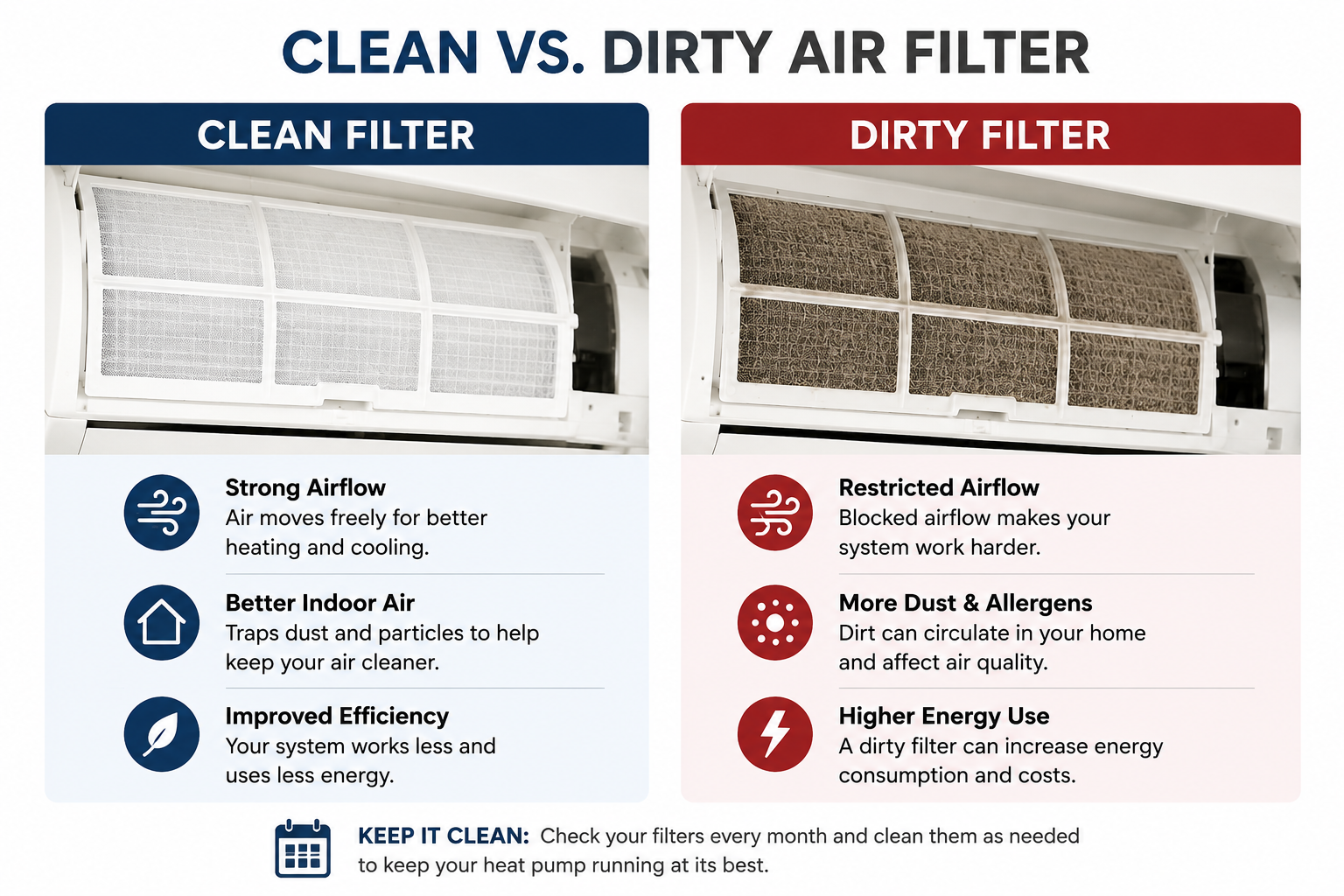
Not sure where to start? Our step-by-step air filter cleaning guide walks you through the process and explains how often your filters should be cleaned based on your home's environment.

Pro Tip
A quick filter inspection only takes a few minutes. If the filter appears dusty or clogged, clean it according to your owner's manual before it begins affecting airflow and overall performance.
2. Blocking the Indoor Unit
Indoor units need unrestricted airflow to distribute heated or cooled air effectively.
Furniture, curtains, shelving, or decorative items placed too close to the unit can reduce airflow and impact overall comfort.
| Recommended | Avoid |
|---|---|
| Keep furniture a comfortable distance away | Placing sofas directly underneath |
| Leave vents unobstructed | Hanging curtains over the unit |
| Allow air to circulate freely | Blocking airflow with shelving or décor |
3. Letting Debris Build Up Around the Outdoor Unit
Your outdoor unit also requires good airflow to operate efficiently.
Throughout the year, leaves, grass clippings, branches, snow, or ice can collect around the unit and restrict airflow.
Checking the area regularly and removing debris helps your heat pump continue operating as intended.
| Check | Why It Matters |
|---|---|
| Remove leaves and debris | Maintains proper airflow |
| Trim nearby vegetation | Helps prevent airflow restrictions |
| Inspect after storms | Helps identify fallen branches or debris |
| Maintain recommended clearance | Supports efficient performance |
If you're using one of Senville's cold climate heat pumps, maintaining proper airflow around the outdoor unit is especially important during the winter months.
Seasonal Reminder
During the fall, leaves can quickly collect around the outdoor unit. In winter, heavy snow or ice buildup may also restrict airflow. Check the area regularly throughout the season.
4. Constantly Changing the Thermostat
It's a common misconception that turning the thermostat significantly higher will heat your home faster.
Heat pumps are designed to maintain a steady indoor temperature rather than rapidly heating a space. Frequently adjusting the temperature can reduce comfort and cause unnecessary system cycling.
Instead, choose a comfortable setting and allow the heat pump to maintain it.
Good to Know
Heat pumps are designed to maintain a consistent indoor temperature. Turning the thermostat much higher will not necessarily heat your home faster and may reduce overall comfort.
5. Ignoring Unusual Sounds or Error Codes
Heat pumps naturally make a variety of operating sounds, but new or persistent noises shouldn't be ignored.
If you notice loud rattling, grinding, buzzing, or recurring error codes, it's a good idea to inspect the system or contact a qualified HVAC professional if needed.
Addressing concerns early may help prevent larger repairs later.
| Usually Normal | May Need Attention |
|---|---|
| Gentle fan noise | Loud rattling |
| Temporary defrost cycle | Grinding sounds |
| Soft clicking during startup | Persistent buzzing |
| Automatic fan speed changes | Repeated error codes |
If you need additional troubleshooting guidance, visit the Senville Support Centre for helpful resources and documentation.
6. Not Understanding Defrost Mode
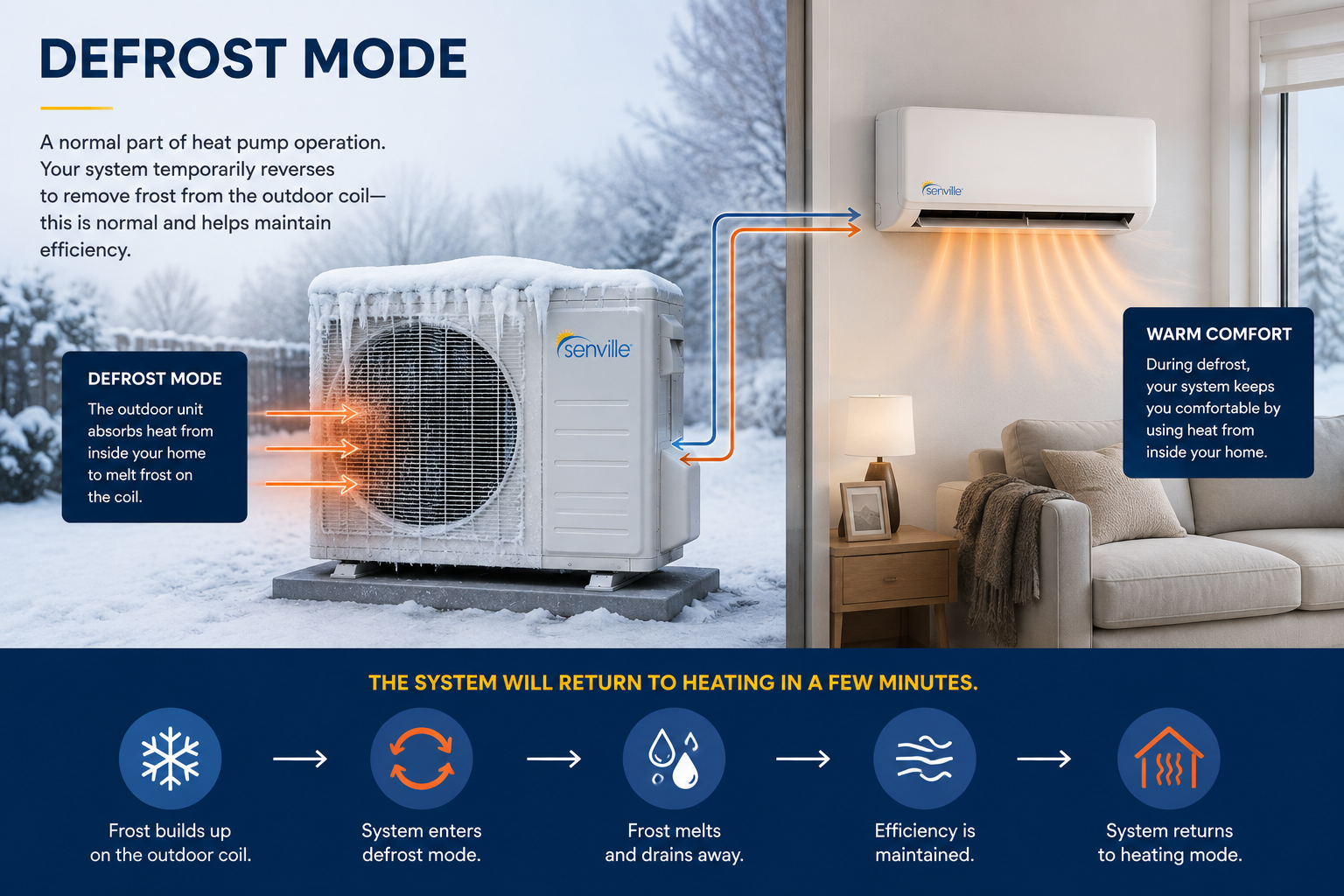
Many homeowners become concerned when they notice steam coming from the outdoor unit or the system temporarily pauses heating during winter.
In many cases, this is simply the heat pump entering defrost mode, a normal feature designed to remove frost from the outdoor coil.
Defrost cycles usually last only a few minutes before the system resumes normal heating operation.
7. Skipping Seasonal Maintenance
Routine maintenance helps your heat pump continue operating efficiently throughout the year.
Simple tasks such as cleaning filters, checking around the outdoor unit, and scheduling professional inspections when appropriate can help support long-term performance and reliable comfort.
Preventative maintenance is often easier and more convenient than dealing with unexpected issues during peak heating or cooling seasons.
Quick Homeowner Checklist
Inspect and clean air filters regularly.
Keep furniture and curtains away from indoor units.
Remove leaves, snow, and debris around the outdoor unit.
Maintain a consistent thermostat setting.
Watch for unusual sounds or recurring error codes.
Recognize defrost mode as a normal part of winter operation.
Complete seasonal maintenance before peak heating and cooling seasons.
Frequently Asked Questions About Heat Pump Maintenance
Still have questions? Here are answers to some of the most common questions homeowners ask about maintaining a heat pump throughout the year.
How often should I clean my heat pump filters?
Most homeowners should inspect their air filters every month and clean them as needed, following the recommendations in their owner's manual or product support resources. Homes with pets, frequent use, or higher levels of dust may require more frequent cleaning.
Is steam coming from my outdoor unit normal?
Yes. During colder weather, your heat pump may enter defrost mode to remove frost from the outdoor coil. Steam rising from the outdoor unit is a normal part of this process and usually lasts only a few minutes.
Can heat pumps operate effectively during Canadian winters?
Yes. Modern cold-climate heat pumps are designed to provide reliable heating even during low outdoor temperatures. Choosing a system designed for Canadian conditions helps ensure dependable comfort throughout the winter season.
Should I leave my heat pump running all day?
In most cases, yes. Heat pumps are designed to maintain a consistent indoor temperature efficiently. Frequent thermostat adjustments can reduce comfort and may cause the system to work harder than necessary.
Why does my heat pump enter defrost mode?
During cold, humid weather, frost can build up on the outdoor coil. Defrost mode temporarily reverses the system to remove this frost, helping maintain efficient heating performance. This is a normal operating feature, and your system will automatically return to heating once the cycle is complete.
Keep Your Heat Pump Ready for Every Season
Regular maintenance doesn't have to be complicated. Small habits, like cleaning filters, maintaining clear airflow, and understanding how your system operates, can help support reliable comfort throughout the year. Following recommended maintenance practices can also help you get the most from your system, so be sure to review your Senville warranty information for coverage details and maintenance recommendations.
Looking to learn more about heat pumps or explore solutions for your home? Browse our product lineup to compare systems designed for year-round comfort.